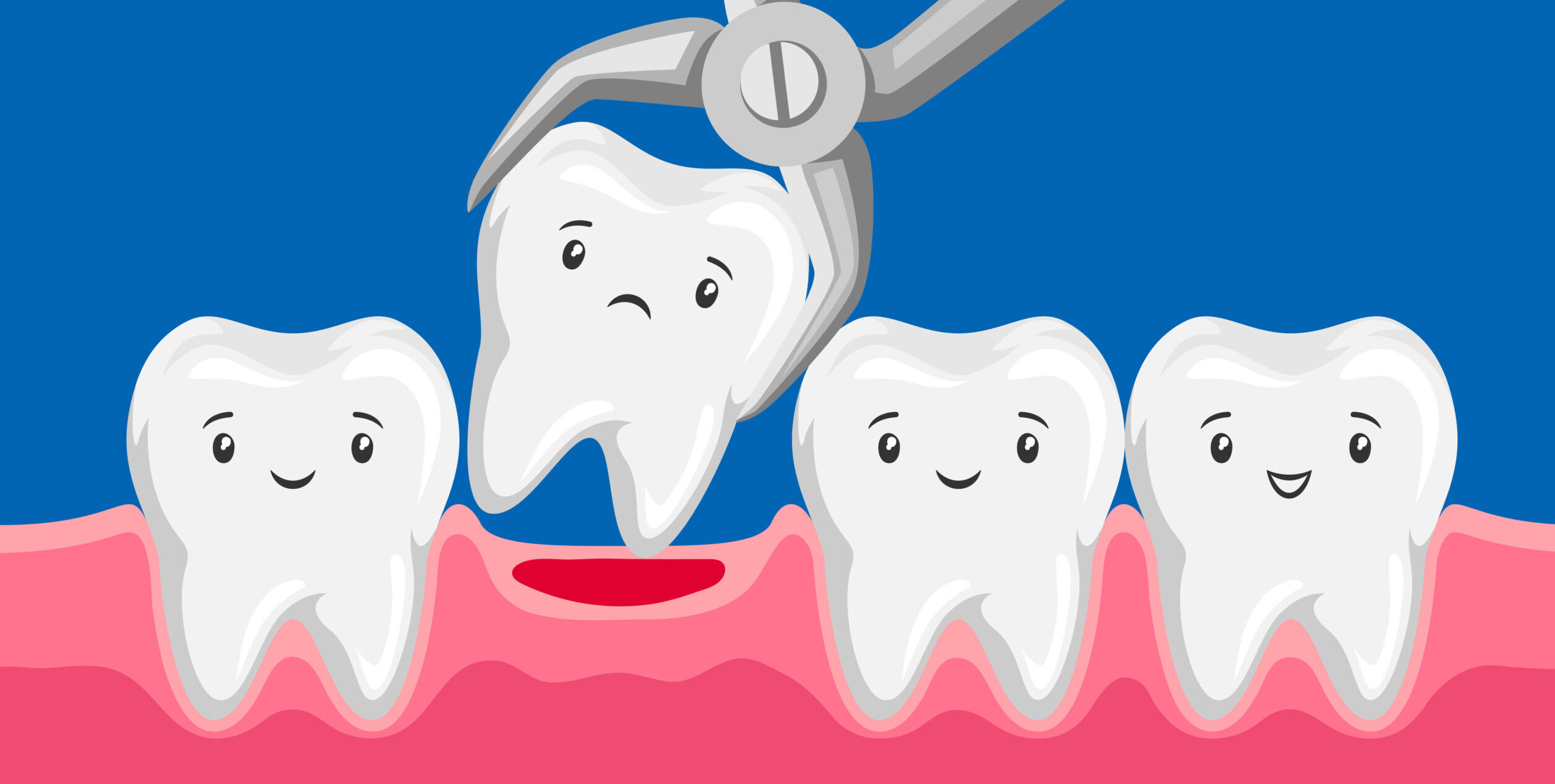
Most first loose teeth take care of themselves. A baby tooth that is ready to come out will wiggle freely in every direction, will barely hurt, and will usually fall out on its own with normal eating and fidgeting. This handout covers when a little help at home is reasonable, how to do it safely, and when the problem belongs with your child’s dentist rather than a kitchen chair.
Key Takeaways
- A baby tooth that is ready to come out wiggles in all directions with minimal pain.
- If the tooth is barely loose, it is not ready. Leave it alone.
- Never tie floss or string to a door, and never use pliers, tweezers, or pulling tools.
- A permanent tooth erupting behind a baby tooth, known as shark teeth, usually resolves on its own once the baby tooth loosens and falls out, but this is the moment to consult your child’s dentist if progress stalls.
- Establish a dental home when the first tooth emerges, or by age 3 at the latest. The AAPD’s stricter recommendation is by age 1 or within 6 months of the first tooth. ELP’s recommendation is to bring your child in at first-tooth emergence and not to wait past age 3.
When Baby Teeth Usually Fall Out
Most children lose their first tooth between ages 5 and 7. The lower front teeth (central incisors) come out first, then the upper front teeth. The process continues through roughly age 12. Loss of any baby tooth before age 5 is worth a dental visit. If the tooth was lost to trauma, the dentist will check that the underlying permanent tooth bud and surrounding tissue are intact. No loss at all by age 8 is also worth a dental visit. No loss by age 8 can suggest a missing permanent tooth, an extra tooth crowding the area, or a baby tooth that has fused to the bone, all of which a dentist can evaluate.
Baby teeth are placeholders. They matter for chewing, speech, and guiding permanent teeth into the right position. When a baby tooth is lost too early from decay or injury, neighboring teeth can drift into the gap and crowd the permanent tooth that is supposed to come in there, sometimes requiring a space maintainer.
Is the Tooth Ready?
A tooth is ready when your child can move it freely forward and back, side to side, and rotate it, all without meaningful pain or bleeding.
Ready for a gentle home approach:
- Moves in every direction with the tongue or a clean finger.
- Little or no pain with wiggling.
- No significant bleeding, swelling, pus, or redness at the gum line.
- It is clearly the baby tooth, not the permanent tooth erupting behind it.
Not ready. Leave it alone:
- Only slightly loose or barely moves.
- Sharp pain with wiggling.
- Bleeding, swelling, pus, or foul smell at the gum line.
- “Shark teeth” pattern: a permanent tooth visible behind a baby tooth that has not yet loosened.
Helping It Along at Home
- Let your child wiggle it with a clean tongue or clean finger over several days. Self-wiggling is the safest approach.
- Crunchy foods such as apple slices, raw carrot, or toast can apply just enough pressure to finish the job. Make sure your child is sitting upright and chewing slowly so a freed tooth is not swallowed or aspirated unexpectedly.
- Continue regular brushing of the area. Clean teeth and clean hands matter.
If You Choose to Remove It
Only proceed if the tooth meets every readiness criterion above.
- Wash your hands.
- Have your child rinse with water.
- Grip the tooth with a folded piece of clean gauze or tissue.
- Use a quick, gentle twist and pull. Think removing a Band-Aid rather than yanking on a rope.
- If the tooth does not come out easily, stop. It is not ready.
After the Tooth Is Out
- Have your child bite on clean gauze with firm, continuous pressure for 5 to 10 minutes. A small amount of bleeding is expected.
- Weight-appropriate acetaminophen or ibuprofen is fine for discomfort.
- Soft, cool foods for the rest of the day: yogurt, applesauce, ice cream.
- Avoid vigorous swishing or spitting for the first 24 hours so the clot stays in place.
When to Call the Dentist
- A piece of tooth or root breaks off and remains in the gum.
- Bleeding continues beyond 15 minutes of firm pressure.
- Increasing pain, swelling, pus, bad smell, or fever after the tooth is out.
- A permanent tooth is visibly coming in behind a baby tooth and the baby tooth remains firm after two to three months, or the permanent tooth is significantly displaced or more than halfway erupted.
- The permanent tooth is erupting in an unusual position or is clearly crowded.
Most general pediatricians do not perform dental extractions. If a loose tooth needs to be removed by a professional, your child’s pediatric dentist is the right person for the job.
What Not to Do
- No string tied to a doorknob. This is unpredictable, can snap the tooth, and can damage the gum.
- No pliers, tweezers, or household tools.
- No yanking on a tooth that is not clearly ready.
- No numbing gels such as Orajel or other benzocaine or lidocaine products. These are not appropriate for routine tooth loosening and carry their own risks.
FAQ
Is it okay to pull out a loose baby tooth?
Only if it is extremely loose in every direction and essentially painless. Otherwise, let it come out on its own.
Will losing baby teeth affect my child’s speech?
Temporary gaps may cause small, short-lived changes that resolve as permanent teeth come in. Early loss from decay or injury has a larger effect and is worth a dental visit.
What if my child swallows the tooth?
It will pass without harm. No action is needed.
When should my child first see a dentist?
ELP recommends the first dental visit when your child’s first tooth comes in, or by age 3 at the latest. The AAPD’s stricter recommendation is by age 1 or within 6 months of the first tooth, whichever comes first. Either approach catches the same window for most families.
Bottom Line
Most baby teeth come out with nothing more than a wiggle and a patient parent. When in doubt, wait. When something looks wrong, call the dentist.
Call ELP at (727) 372-6760 or schedule online. Stay healthy my friends.
Sources
- American Academy of Pediatric Dentistry (AAPD) policy on the dental home and periodicity of examination.
- American Academy of Pediatrics, HealthyChildren.org: articles on tooth eruption, shedding, and dental care for children.
- AAPD clinical guidance on ectopic eruption (“shark teeth”).